
Over the last decade, across countries various types of alternative media have become more common. This holds in particular for right-wing alternative media, but there are prominent left-wing alternative media as well, and what type is most common and most influential varies across countries. The extent to which they are ”alternative” and differ from mainstream news media also differ. They have in common that they typically seek to function as a ”corrective” toward mainstream news media, but beyond that the category is quite heterogenous. While some are close to mainstream news media in terms of following traditional journalistic norms and values and seeking to provide truthful news, others care less about truth and verifying information and more about whether potential stories align with their partisan narratives and goals.
A key question is however alternative media should be assessed from a democratic perspective. Do they strengthen or weaken democracy – or does it depend?
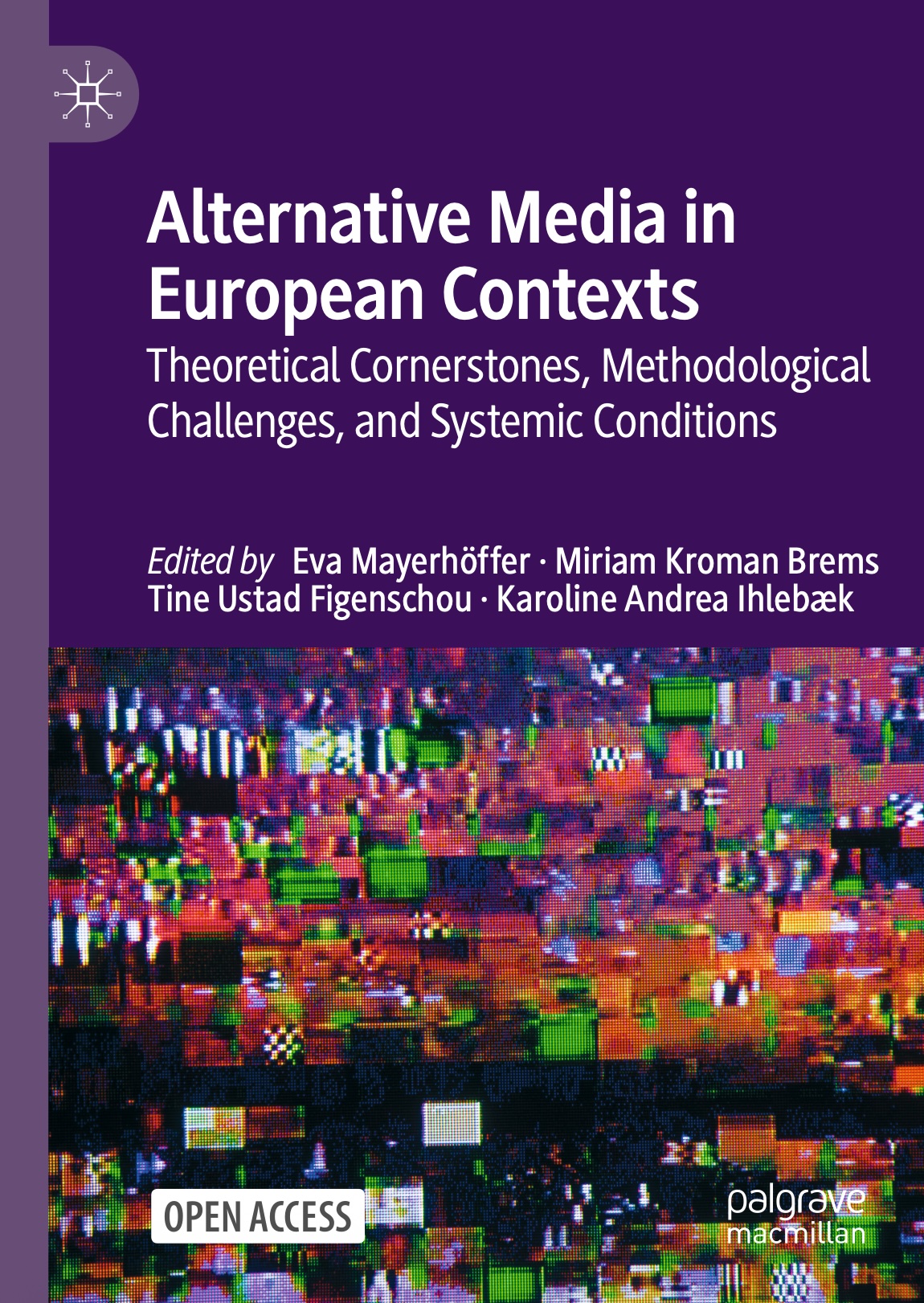
This is the key question in a new chapter written together with Michael Karlsson, professor at Karlstad University. It is featured in the new book Alternative media in European contexts. Theoretical cornerstones, methodological challenges, and systemic conditions, edited by Eva Mayerhöffer, Miriam Kroman Brems, Tine Ustad Figenschou and Karoline Andrea Ihlebaek. For those who are interested in, or do research on, alternative media, this book should be of great interest. Fortunately, it is also Open Access and free to download.
The title of our chapter is Friends, foes, or does it depend? Toward a normative framework for assessing (alternative) media. It started out as an attempt to develop a normative framework, based in democratic theory, for assessing alternative media. However, we quickly realized there cannot be different normative frameworks for traditional news media and alternative media. Hence, the framework we developed applies to all types of media that claim to provide the kind of information people need to become or stay informed about politics and society.
While this is not the place to go into all details, a key argument is that the ultimate characteristic of information that purports to inform is that it gets as close to empirical truth as possible. That, in turn, requires not only that the media verify all information to make sure that it corresponds to evidence and clearly separate facts and opinions. It also requires that facts are prioritized over opinions, and that the media verify information not only information they themselves gather but also factual statements from politicians and other sources. Among other things.
What is not required, however, is balance. Oftentimes balance is seen as an important component of journalistic objectivity, but we argue that this is a misconception. What is way more important is that the information provided gets as close to truth as possible. From that perspective, providing balance in debates that involve factual disputes leads away rather than closer to truth, and risks misinform rather than inform people. If anything, then, media that claim to be informing people should worry less about balance and more about what information rests on evidence and gets closest to the truth.
In the abstract, then, neither traditional news media nor alternative media strengthen or weaken democracy. In the end, it depends on what kind of news and information they provide.
Having said that, research clearly suggests that traditional news media to a greater extent than alternative media live up to these standards, and that many alternative media are highly problematic from a normative democratic perspective. This holds in particular for right-wing alternative media, which research shows more often spread false and misleading information while at the same time seeking to undermine trust in mainstream news media. Such media do not strengthen democracy. They are rather part of the larger political forces undermining democracy and contributing to democratic erosion.

